
On-Page SEO Checklist Every Small Business Website Needs
An effective on-page SEO checklist is a must for any small business website aiming to rank higher on Google, reach the right audience, and turn visitors into paying customers. Even businesses with excellent products or services can struggle online if their website isn’t optimized properly.
On-page SEO focuses on improving elements within your website, including content, layout, and HTML structure, so search engines can clearly understand what each page is about. In 2026, on-page SEO is no longer optional—it forms the core of strong digital visibility. This checklist highlights the most important on-page SEO elements every small business website should implement.
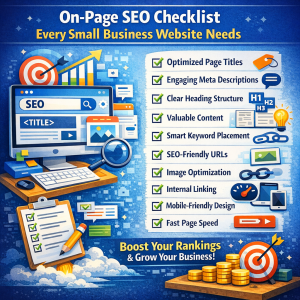
1. Optimized Page Titles (Title Tags)
Page titles play a crucial role in on-page SEO. They inform both search engines and users about the topic of your page.
Best practices include:
Adding your primary keyword naturally
Keeping titles within 60 characters
Making them clear and engaging
Avoiding keyword stuffing
Well-written titles not only help rankings but also encourage users to click.
2. Engaging Meta Descriptions
Although meta descriptions don’t directly affect rankings, they have a strong impact on click-through rates. A compelling meta description can make users choose your page over others.
Checklist:
Limit to 155 characters
Use the main keyword naturally
Highlight benefits or solutions
Include a clear call-to-action
Think of meta descriptions as short sales pitches for your content.
3. Clear Heading Structure (H1, H2, H3)
Headings improve content readability and help search engines understand page structure.
On-page SEO checklist for headings:
Use only one H1 per page
Add the primary keyword in the H1
Organize content using H2 and H3 tags
Keep headings simple and descriptive
Proper heading structure makes your content easier to scan and rank.
4. Valuable and Informative Content
Content remains the foundation of on-page SEO. Google prioritizes pages that genuinely help users and align with search intent.
Your content should:
Clearly answer user queries
Be original and written for humans
Avoid unnecessary filler
Stay current and relevant
For small businesses, helpful content builds credibility and trust.
5. Smart Keyword Optimization
Keywords still matter, but natural placement is more important than repetition.
Keyword placement checklist:
Page title
Meta description
First 100 words
Headings
Image alt text
URL
Avoid forcing keywords. Focus on clarity and readability first.
6. SEO-Friendly URLs
Clean and simple URLs enhance user experience and help search engines understand your page.
Best practices:
Keep URLs short and readable
Include the main keyword
Avoid numbers and special characters
Use hyphens instead of underscores
Example: /on-page-seo-checklist
✘ /page?id=123
7. Image Optimization and Alt Text
Images improve engagement, but poorly optimized images can slow your website and harm SEO.
On-page SEO checklist for images:
Compress images to reduce load time
Use meaningful file names
Add relevant alt text
Avoid large or unnecessary image sizes
Alt text also improves accessibility and image search visibility.
8. Effective Internal Linking
Internal links help search engines crawl your site and encourage visitors to explore more pages.
Internal linking tips:
Link to related blogs or service pages
Use clear and relevant anchor text
Avoid excessive links on one page
Guide users naturally through your site
Strong internal linking improves SEO and user engagement.
9. Mobile-Friendly Website Design
With Google’s mobile-first indexing, your website’s mobile version plays a key role in rankings.
Mobile optimization checklist:
Responsive layout
Easy-to-read text
Click-friendly buttons
Fast mobile loading speed
A poor mobile experience can reduce both rankings and conversions.
10. Page Speed Optimization
Website speed directly affects user experience and search rankings.
Ways to improve speed:
Compress images
Remove unnecessary plugins
Enable browser caching
Use reliable hosting
Tools such as Google Page Speed Insights help detect performance problems and provide recommendations to improve site speed.
11. Clear and Actionable CTAs
SEO helps bring visitors, but conversions grow your business.
Effective CTAs:
Are easy to spot
Match user intent
Guide visitors to the next step
Avoid aggressive sales language
Examples include “Get a Free Quote,” “Contact Us,” or “Download the Guide.”
Final Thoughts
An on-page SEO checklist isn’t about tricking search engines—it’s about delivering a better experience for users while making your content easy to understand for Google. For small businesses, on-page SEO is one of the most cost-effective ways to increase online visibility.
By applying this checklist consistently, you build a strong SEO foundation that supports higher rankings, steady traffic, and long-term growth. Optimize regularly, update when needed, and let your website work for you around the clock. 🚀