
Digital Marketing for Small Business in 2026
Digital Marketing for Small Business in 2026 is no longer just a promotional tool—it is a survival and growth strategy. As customer behavior becomes more digital-first and competition increases across every industry, small businesses must use smart digital marketing strategies to stay relevant, visible, and profitable.
In the past, small businesses could rely on word-of-mouth or local exposure. Today, customers search online, compare options, read reviews, and make decisions before ever contacting a business. This makes digital marketing a powerful equalizer, allowing small businesses to compete with larger brands when done right.
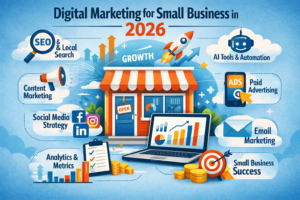
Why Digital Marketing for Small Business Matters in 2026
Consumers in 2026 expect businesses to be present online. Whether someone is looking for a local service, product, or consultation, their journey usually starts on Google or social media.
Digital marketing for small business helps you:
-
Reach targeted customers instead of a broad audience
-
Build trust and credibility online
-
Generate consistent leads and sales
-
Track performance and improve strategies
Without digital marketing, even great products or services can remain invisible.
SEO: The Backbone of Digital Marketing for Small Business
Search Engine Optimization (SEO) remains one of the most cost-effective digital marketing strategies for small businesses in 2026. Unlike paid ads, SEO focuses on long-term visibility and organic growth.
Key SEO trends to focus on:
-
Local SEO and Google Business Profile optimization
-
Search intent–based content
-
Voice and mobile search optimization
-
Fast-loading, mobile-friendly websites
When digital marketing for small business includes strong SEO, it brings in high-quality traffic that is already looking for your solutions.
Content Marketing That Educates and Converts
Content marketing is a core part of digital marketing for small business because it builds trust before selling. In 2026, customers prefer brands that educate rather than push constant promotions.
Effective content ideas include:
-
Blog posts solving customer problems
-
Short educational videos
-
Case studies and success stories
-
Social media posts with practical tips
Helpful, consistent content positions your business as an authority and keeps your brand top of mind.
Social Media Marketing: Engagement Over Numbers
In 2026, social media platforms reward meaningful engagement more than follower count. For small businesses, this is a big opportunity.
Digital marketing for small business on social media should focus on:
-
Consistent posting
-
Authentic storytelling
-
Customer reviews and testimonials
-
Educational or behind-the-scenes content
You don’t need to go viral—you need to stay visible and relatable to your audience.
Paid Advertising for Faster Results
While organic strategies take time, paid advertising delivers quicker visibility. Platforms like Google Ads and Meta Ads allow small businesses to reach customers based on intent and behavior.
To make paid ads work:
-
Set clear goals (leads, calls, sales)
-
Use simple landing pages
-
Track conversions, not just impressions
-
Test and optimize ads regularly
Paid advertising works best when combined with organic digital marketing for small business strategies.
Email Marketing Still Delivers High ROI
Despite new platforms, email marketing remains one of the highest-return channels in 2026. It allows small businesses to communicate directly with interested customers.
Modern email marketing focuses on:
-
Personalized messages
-
Automated follow-ups
-
Valuable content instead of spam
-
Clear call-to-actions
Email marketing strengthens relationships and encourages repeat business.
AI Tools in Digital Marketing for Small Business
AI has become a strong support system in digital marketing for small business, helping save time and improve efficiency.
AI tools can assist with:
-
Keyword research
-
Content planning
-
Ad performance optimization
-
Customer behavior analysis
However, businesses should avoid fully automated content. Human creativity and strategy still matter most in building trust.
Tracking Performance and Making Smarter Decisions
One major advantage of digital marketing for small business is measurability. In 2026, businesses that track data make better decisions.
Important metrics include:
-
Website traffic
-
Lead sources
-
Conversion rates
-
Customer engagement
Using tools like Google Analytics and Search Console helps businesses understand what’s working and what needs improvement.
Final Thoughts
Digital Marketing for Small Business in 2026 is about strategy, consistency, and adaptability. You don’t need a huge budget—you need the right approach.
By combining SEO, content marketing, social media, paid ads, and data-driven insights, small businesses can build visibility, trust, and sustainable growth in an increasingly competitive digital landscape.
The future belongs to businesses that show up online with purpose and value. 🚀